






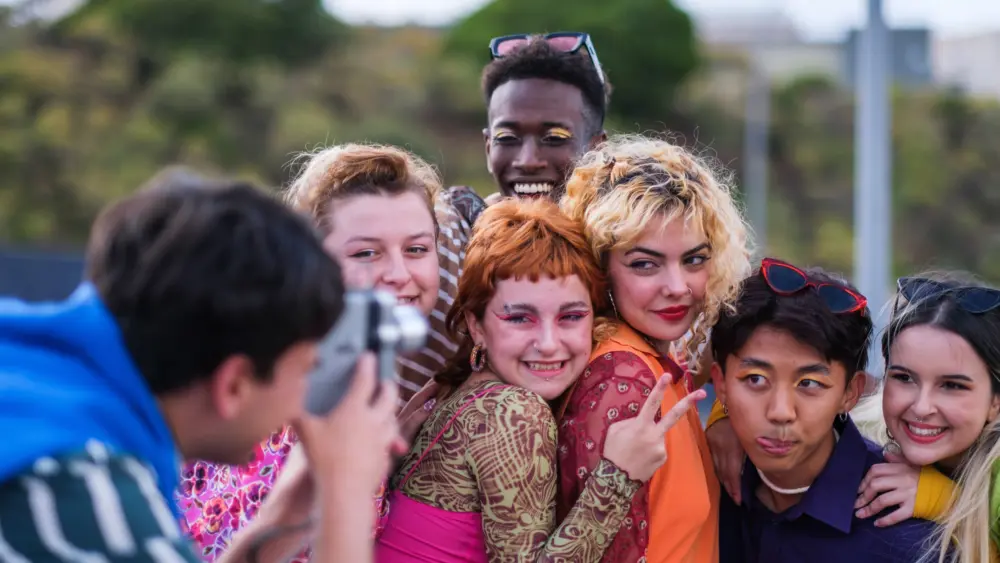
While an extrovert is often defined as someone who thrives in social settings, feels energized from social interactions and generally likes being the center of attention, an introvert often feels more comfortable in low-energy environments.
They often prefer smaller groups and find intense social interactions to be exhausting.
But now, there’s something called an ‘otrovert’, which is a new personality trait recently coined by experts… And it’s completely different to an extrovert or introvert.
.jpg)
American psychiatrist Rami Kaminski came up with the term after recognizing its traits in both himself and some of his patients.
He used it to describe people who don’t see themselves as being an extrovert or an introvert.
For many people who have often struggled to belong to either group, ‘otrovert’ has described them perfectly.
Kaminski explained: “When Jung invented the terms extrovert and introvert, he saw them as two fundamental orientations of the personality. I see the otrovert in the same way. A personality trait that faces away from the group.
“Extroverts and introverts are inherently communal, while the otrovert is an outsider to the group. In itself, it is not a problem or condition, nor is it a diagnostic label.

Extroverts thrive in social settings (Getty Stock Photo)
“It simply means that while most people learn to develop a sense of belonging to a specific group through social conditioning, otroverts remain social but not communal.”
Kaminski has explained how he first noticed some of the ‘otrovert’ qualities in himself when he joined the Scouts as a child.
He explained that while sitting in a circle and repeating the pledge, most of his peers seemed excited and in awe at the sense of connection, but he felt nothing.
“Otroverts are very friendly and able to forge very deep connections with other people,” he told the Daily Mail.

Otroverts may feel they don’t belong (Getty Stock Photo)
“The only social difference happens in the lack of connection to groups: collective identity or shared traditions.”
Kaminski has also spoken about something he calls the ‘Bluetooth phenomenon’ which describes the ability to emotionally pair with others.
For otroverts, this is something that doesn’t come naturally, with Kaminski adding: “Otroverts discover very early in life that they feel like outsiders in any group. This is despite the fact that they are often popular and welcome in groups.
“That discrepancy may cause emotional discomfort and a sense of being misunderstood.”